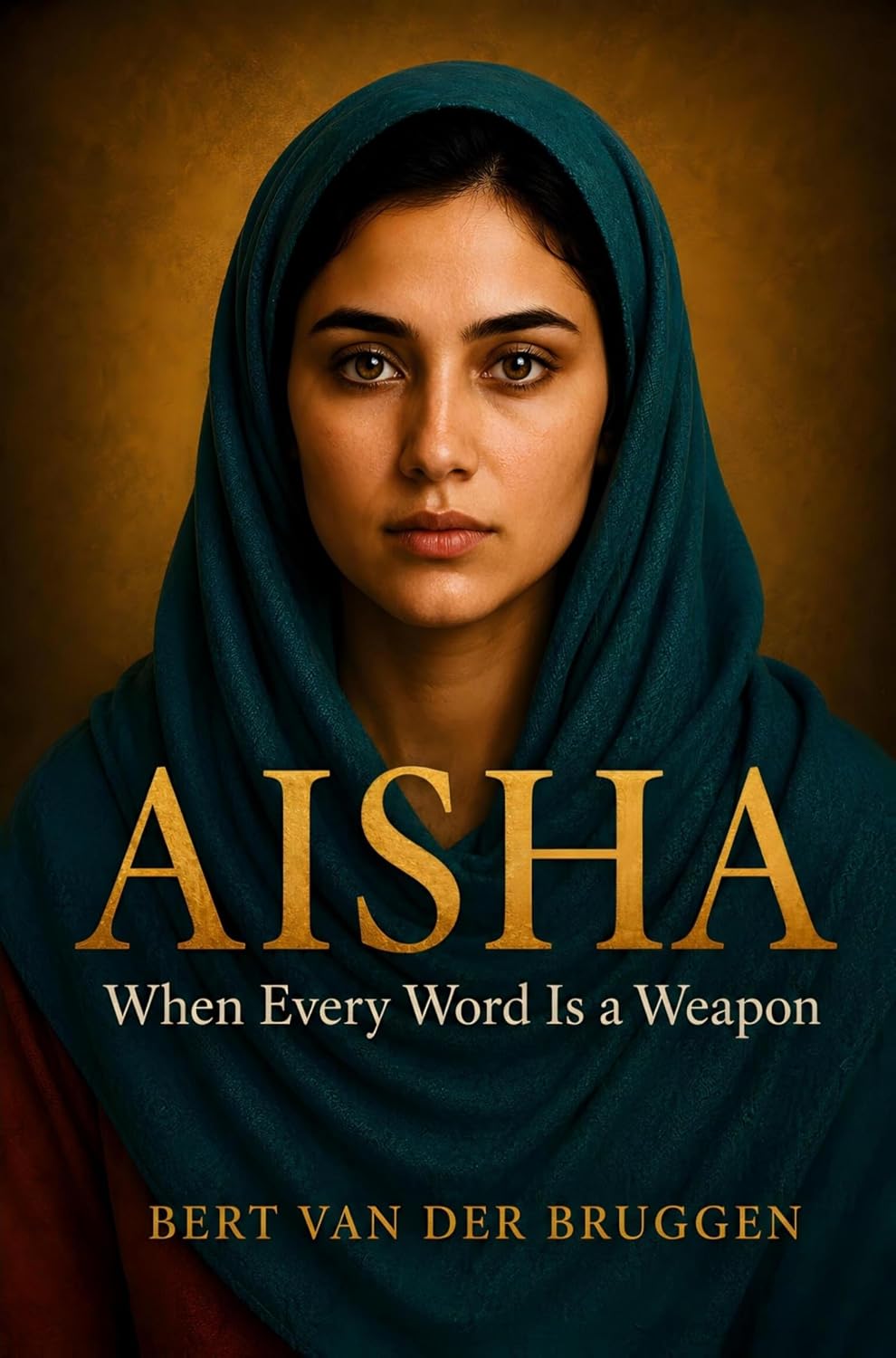
Pages: 395
Released On: 11/08/2026
Some wars are fought with bullets. Others are fought with words.
Born in Afghanistan and raised in London, Aisha has spent her life between two worlds. When she returns to her homeland as an interpreter, she discovers that words are never neutral. Every sentence can save a life or destroy one.
Caught between family loyalty, political pressure and her own conscience, Aisha is drawn into a dangerous struggle where every decision has consequences. The more she speaks, the greater the danger becomes, until she must answer one impossible question: How much are you willing to sacrifice for the truth?
*****
Thanks to Bert for sending me a copy of this title in return for an honest review.
This is a hard book to read. I don’t mean that in the sense that it’s written badly, but in terms of the topic. It’s a hard book to read, but a powerful and important one. This does mean it’s not always classically enjoyable in the way that a lighthearted comedy or romance might be. And that’s not a negative because I did enjoy it. (I know that sounds weird but I’m hoping you know what I mean). It’s a piece of entertainment, yes, like a novel is, but it asks so much more of the reader than just to enjoy a story for a few hours. It leaves you with some very important questions and you’ll be thinking about it long after you finish.
Being a white woman in the UK, it’s hard to imagine sometimes what it’s like to be a woman in a country such as Afghanistan, where freedom is so often controlled, and understandably, people often choose to stay quiet out of fear. But we need people like Aisha who are willing to use their voice in despite of, or maybe because of, the risks to their safety.
It’s a novel, but it feels like a non-fiction. It’s entertaining like a novel, but it’s got that powerful, intellectual quality that I often look for in my factual books.
Whilst Aisha is the main character, we do get to follow other characters as well, which gives us a more rounded picture of the story and how events are affecting Aisha.
He has chosen (whether consciously or not) to not explicitly depict the goings-on, and I think he’s found the right balance. You don’t want to sugar-coat or pretend it’s not happening, but I think if he’d gone into too much detail it would have become a bit sensationalised. By keeping it back, it allows the reader to use their imagination a bit more, which means readers will all get something different out of it.
The only…not negative, because It’s not a negative, more of an observation. The writing style took some getting used to. It’s more prose than dialogue (which I usually prefer) and it reads poetically, but it is a bit fragmented at times, which means it lacks a bit of natural flow.
I did like the shorter chapters. I’m not a fan of long, drawn out chapters, so this was a plus for me, and it helped the page count (which isn’t short) zoom by.
I’m intrigued to know what Bert’s experience in this world is, if he has any. I don’t know anything about him other than what he put in his email and what I’ve seen online, so I’m interested to know if he does have first-hand experience of the plot or situations or emotions in the story, or if he’s built upon what is shown in the media and then used his imagination to pad it out. I think having that context might have made it all feel a bit deeper.

