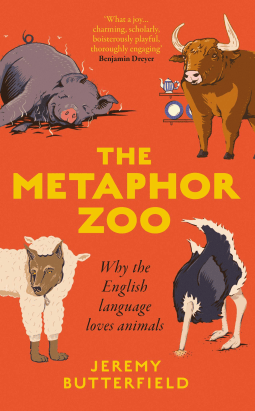
Published By: Oneworld
Pages: 384
Released On: 05/11/2026
English is home to a veritable menagerie of animal metaphors, similes, sayings, adages, proverbs, idioms and rhymes, ranging from the commonsense to the utterly absurd. From curious cats to mindless sheeple, lexicographer Jeremy Butterfield takes a species-by-species safari through the English language in pursuit of its most unusual animal idioms.
Learn how coots – perfectly nice little birds – become synonymous with madness, baldness and idiocy. Figure out if bees actually have knees, and if so, why they’re so great. And discover why pigs ‘oink’ in English, ‘khankhanah’ in Arabic, ‘heng heng’ in Mandarin – but cats always mew. Filled to the brim with fascinating facts and trivia, The Metaphor Zoo is the perfect gift for language lovers, amateur linguists and grammar nerds alike.
*****
Thanks to NetGalley and Oneworld for the gifted copy of this title in return for an honest review.
I love the English language and being all nerdy about word choices and etymology etc. and I love animals so this seemed like the perfect book for me.
I don’t know why, but I was expecting it to be a bit more frivolous. Not that it’s not, but it’s also highly technical which made it a slightly more serious book than I thought it would be, but it’s still enjoyable. Because of its technical aspects, I thought it might be a bit dry but it’s not. It still manages to be fun and engaging. It was a little slow in places. I didn’t find it overly stretched out but there were times it read slower.
I knew all about animal metaphors and like most people I imagine I use them quite regularly, but I hadn’t really thought about just how many there are, and once you do stop to think, it’s madness really – mad as a box of frogs, one might say.
There were recognisable metaphors but then some I hadn’t heard of, such as “To have a kangaroo loose in the top paddocks”, which is apparently a common Australian metaphor.
I read it as I would a novel, cover to cover, but you could also read it in bits. A chapter here and there when you have five minutes to spare.
It’s a good read for language lovers, animal enthusiasts, grammar neds, as well as amateur linguists. It gives you a bit of everything, no matter your skill in language.
Overall it was a bit dryer and more formal than I was expecting, and some of the pacing was a bit out of whack. But it is very interesting and fascinating and enjoyable and I’d recommended it to experienced linguists and non alike.

