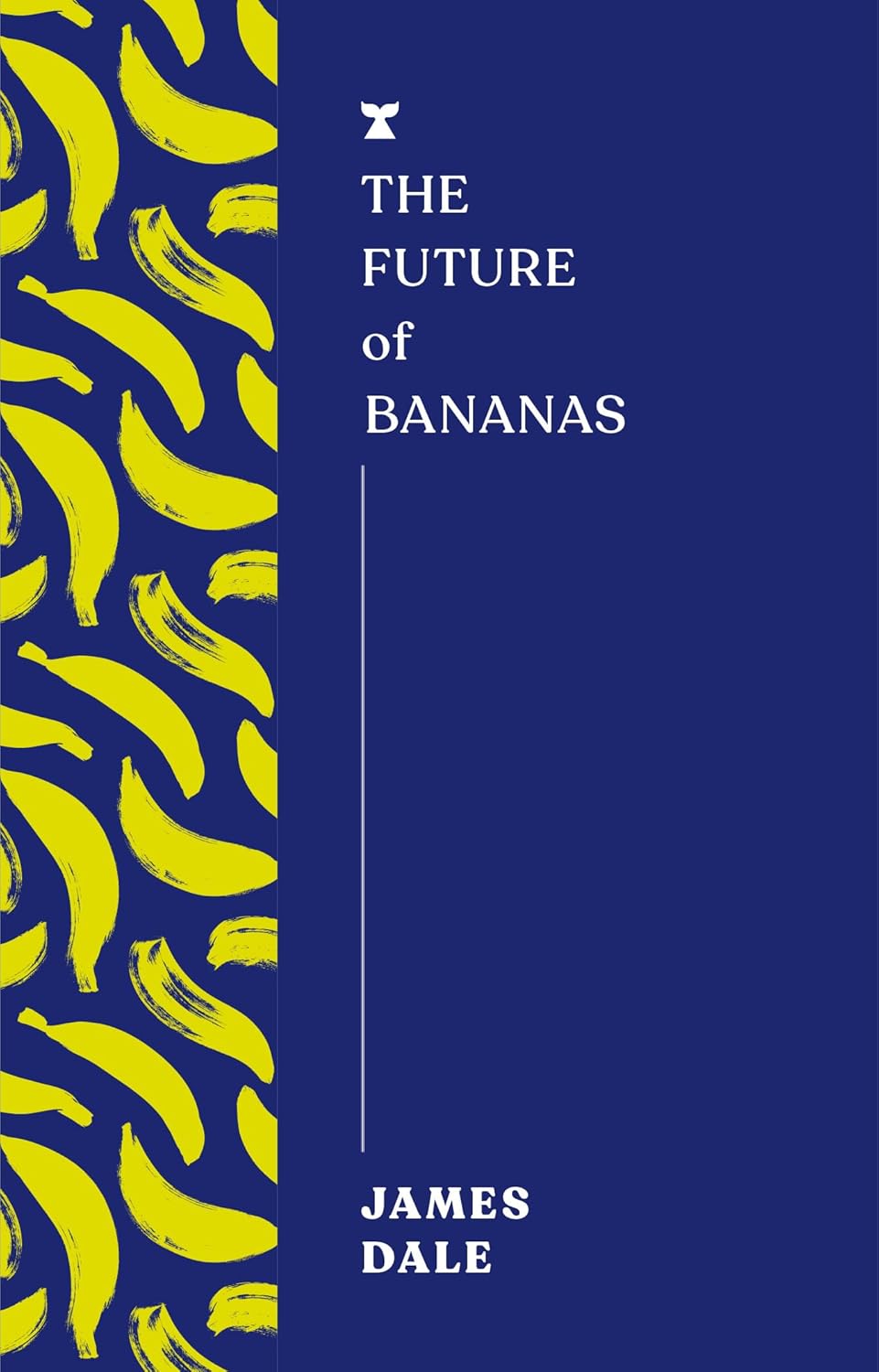
Published By: Melville House
Pages: 144
Released On: 02/07/2026
The most eaten fruit in the world is facing possible extinction. While there are thousands of banana varieties, only one has become the West’s favourite – the Cavendish: our familiar curvy, yellow-skinned, soft-fleshed fruit. But our obsession with the Cavendish has come at a cost.
Years of selective breeding to produce the fruit we love, and humankinds’ migration across the world has left the Cavendish susceptible to disease and climate change. How can we save the future of the banana?
Professor James Dale is leading the way in banana research. Based at Queensland University of Technology in Australia, he and his team have developed the QCAV-4 banana – the world’s first genetically modified banana to be approved for commercial production.
In the book he presents many scenarios that could be used to save the Cavendish based on the latest research and technological developments, from gene editing, cisgenics, AI design and biofortifiction, all the while bringing to life the colourful history of the banana – the lucrative banana industry has resulted in political coups, drug trafficking and even murder. Bananageddon can be prevented, he argues, if the world is ready to embrace a new future led by scientific change.
*****
Thanks to Melville House for the advanced copy of this title in return for an honest review and spot on the book tour.
I’ve read a few of the Futures books – Future of Travel, Future of Gardens, and Future of the Self – and some are more interesting than others. But this one sounded so bizarrely fabulous that I had to read it. I love reading about obscure things. I never thought that a banana could warrant so much scientific research. And any synopsis that includes the word “Bananageddon” in it is just screaming to be read.
I went down a bit of a banana black hole when reading this (that’s a sentence I never thought I’d say). I knew there are more varieties of banana than the typical one we get nowadays, but I didn’t realise just how many options that have existed over time.
James expertly unpacks the past, present, and future of all things banana (another sentence I never thought I’d say).
Like the other Future books, it is heavy going. These aren’t quick and easy books to lose yourself in for an hour or so with a glass of wine. They’re highly informative and scientific and they take a lot of concentration. Which is why I’m glad of the short page count otherwise it might have been too much. But as it is, he’s given us the basics of the banana, which then opens doors for future research. But I will put my hand up and say some of the technical parts went over my head.
I would have preferred shorter chapters for me. Even though it’s a short book, there are only a couple of chapters and they do drag slightly, because of the highly technical language used.
Who knew the history of the banana would be filled with such violence and terror!

