“Imagination is the only weapon in the war against reality.” Lewis Carroll, Alice’s Adventures in Wonderland
Let’s be honest, when life feels heavy, most of us reach for something that helps us switch off, be it a comforting TV show, or a relaxing walk. But for a lot of us, it’s books we escape to.
And we’re not alone. During the 2020 lockdown, over 202 million* physical books were sold in the UK, the first time sales had crossed the 200 million mark for nearly a decade. That’s not just a statistic; it’s a glimpse into how many people turned to stories when reality felt overwhelming.
So…why do we do it? Why do we turn to books when we need to escape?
Books As a Soft Place To Land
Sometimes we just need a break from everything. And books give us a gentle escape from the noise of everyday life, the stress, routines, and emotional exhaustion. Books give us a chance to step into a different world where nothing is expected of us.
For the most part, you don’t have to do anything when you’re reading – in a way, it’s almost meditative. It slows your thoughts, quiets the outside world and helps you to relax. In fact, studies have shown that reading can reduce stress levels by up to 68%^, which is much higher than anything else – even a good ol’ cuppa.
Living Other Lives
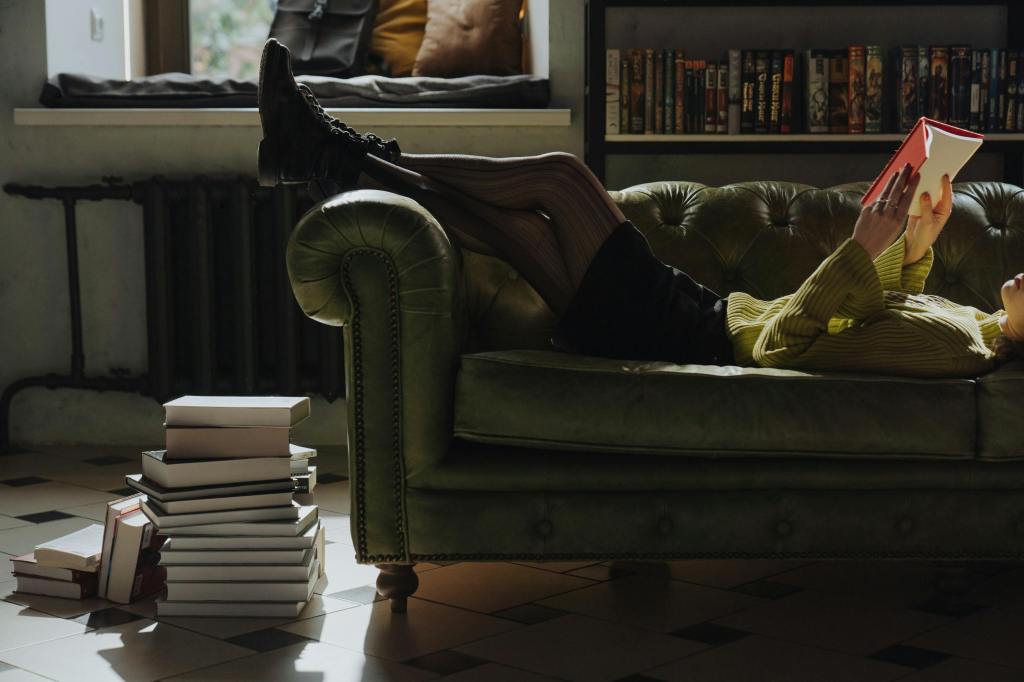
One of the most magical things I find about books is how they let us live lives that aren’t our own. We can solve mysteries, explore distant worlds, fall in love, and fight dragons, and for a little whilst, our own worries fade into the background. We have no chores to do, no bulging inbox, and no school run to rush to. And somehow, it is this distance from our own lives that actually helps us to see things more clearly.
Finding Perspective and Comfort in Stories
Escaping into a book doesn’t mean we’re ignoring reality, and it actually helps us to process it. Reading about other people’s struggles – even fictional ones – can put our own problems into perspective. Historical fiction (one of my favourite genres) in particular has a way of reminding us just how resilient people can be.
I have found that books can be incredibly powerful when it comes to grief and loneliness. There’s something comforting about seeing your feelings reflected back at you through a character, and it’s that gentle reminder that you’re not alone.
When You Just Need a Good Cry
Let’s not pretend we haven’t all picked up a tearjerker on purpose. I know I have.
Books give us a safe space to feel things fully, whether that’s sadness, joy, or hope. They let us process emotions without judgement.
Want to cry? There’s a book that for.
Need something light and funny? There’s a book for that too.
There’s actually a word for that: bibliotherapy.
What is Bibliotherapy?
Bibliotherapy is the idea of using books as a way to support mental health and emotional wellbeing. Whether it’s through fiction, non-fiction, or poetry, reading can help us process emotions and feel less alone.
What Makes a Book Truly ‘Escapist’?
Not all escapism looks the same to everyone, but there are a few things that, in my opinion, really make a book easy to sink into and lose yourself in.
✨A Story That Hooks You: The story doesn’t need to be dramatic or fast-paced, but it does need you to care. Whether it’s a quiet, cosy plot or a big sweeping adventure, you need a reading to keep turning the page.
✨Characters You Feel Close To: The best escapism novel is the one where you feel you know the characters; you root for them, worry about them, even fall in love with them, and you don’t want to leave them behind.
✨Atmosphere That Matters: For many of us, escapism means comfort; cosy settings, gentle but magical worlds, and low-stress environments. We want our books to feel like a warm hug rather than an emotional rollercoaster.
How to Read When You’re Struggling
When life feels difficult, even reading can feel like a lot, and that’s okay. This is where more flexible formats can help you:
– Audiobooks: just press play and drift away
– Short stories: perfect for low-energy and low-concentration days
– Graphic novels: engaging without being overwhelming
But what is most important to remember is that there is no pressure. You can read for five minutes or five hours; you can abandon books halfway; you can re-read old favourites. There are no rules when it comes to escapism.
My Go-To Escapism Genres
All books offer some form of escape, but some genres just feel more comforting than others. Here are a few I always gravitate towards in difficult times:
🧙♀️Fantasy / Romantasy
– Legends & Lattes by Travis Baldree
– The House in the Cerulean Sea by TJ Klune
– Books by Sarah Beth Durst (The Spellshop, The Enchanted Greenhouse)
– Stay for a Spell by Amy Boyles
💕 Romance
– The Dream Harbor series by Laurie Gilmore
– The Cosy Croissant Café by Jane Linfoot
– The Little Board Game Café series by Jennifer Page
🌌 Speculative Fiction
– Books by Laura Pearson (The Many Futures of Maddy Hart, The Life She Could Have Lived)
🏛 Historical & Mythological
– The King’s Witches by Kate Foster
– Medusa by Rosie Hewlett
– The Wolf Den by Elodie Harper
– Girl, Goddess, Queen by Bea Fitzgerald
☁️ Comforting Fiction
– Eleanor Oliphant Is Completely Fine by Gail Honeyman
– Eudora Honeysett Is Quite Well, Thank You by Annie Lyons
– Eddie Winston Is Looking for Love by Marianne Cronin
And if you’re in the mood for something shorter, poetry can be just as powerful – especially collections by Donna Ashworth, Carol Ann Duffy, and Brian Bilston.
There’s No Right Way to Escape
Escaping into a book doesn’t mean you’re avoiding real life, it just means you’re giving yourself a moment to breath; a moment to pause, rest, and feel. A moment to step away from everything that feels too much. And sometimes, that small act of escape is exactly what helps you come back a little stronger.
So, if you need to disappear into a story for a while – go for it! Your book is waiting.

