Published By: Picador
Pages: 320
Released On: 04/06/2026
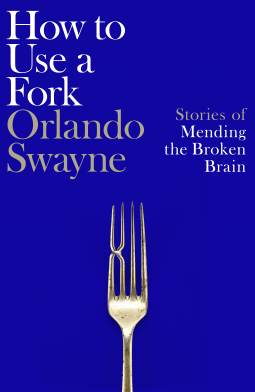
In How to Use a Fork, the beautiful science of brain plasticity meets remarkable human stories of survival and recovery – the man who thought the mitten on his hand was a fish, the woman who thought her arm was a baby, the patient who found his way back to human interaction through music.
As a medical student, Orlando Swayne was taught that a broken brain doesn’t mend. But as a junior doctor, he began to meet patients for whom this was clearly not the case. Intrigued by what he saw, he delved deep into the emerging neuroscience of brain reorganisation, and discovered that over time brain tissue creates new networks and regenerates.
Developments in neurology continue to reveal new capabilities that allow functions we thought to be lost to be restored. The key to recovery, a return to some semblance of our previous selves after brain injury, lies in neurorehabilitation: painstaking work that rebuilds shattered lives.
*****
Thanks to NetGalley and Picador for the advanced copy of this title in return for an honest review.
I have always enjoyed medical books, but now as someone with a Neurological condition, I have particularly become fond of brain-related books so this was definitely my kind of thing.
What I found even more interesting is that Swayne himself is a doctor at the Neuro hospital in London that I go to, and so this became more of a personal read. Whilst I don’t have a Traumatic Book Injury like he talks about in the book, I do have a brain condition that currently has no cure, and so a lot of what he was saying felt so familiar and personal that it made me more involved.
It’s a tough book, with some very sad situations. But I never felt too morose. It’s honest and raw and powerful. But above all it’s hopeful. Yes, brain injury, strokes etc. can cause irreversible effects and you may never be the full person you were beforehand, but with time and patience and experts you can regain something of what you were, and it doesn’t always need to mean the end of the world.
It’s highly technical, scientific, and medical, obviously. I didn’t find it too complicated but I think that might come from a) my enjoyment of medical memoirs, and b) my own personal experiences of neurological issues. But you do need to concentrate. If you’re new to this world, some bits may go over your head but I advise you to look up these unknown terms and stick with it because it’s very interesting and I think worth it.
The chapters are a little longer than my preference, but I didn’t mind too much because the chapters were so well formed.
Towards the end he goes into a bit of detail about Functional Neurological issues, which is what I have, and so I found that endlessly fascinating and moving.
One thing I particularly liked is the case studies. I’ve read a lot of medical books where it’s just full of science and you end up wondering how it matches up. But in this, he’s given us a plethora of (anonymous) cases so we can make more sense of the science and we can feel a bit more empathetic because we can put ourselves in that position.
It took me longer to read than I normally take to read a book but that’s because it’s so intricate and layered that you really need to spend time focussing on it.

