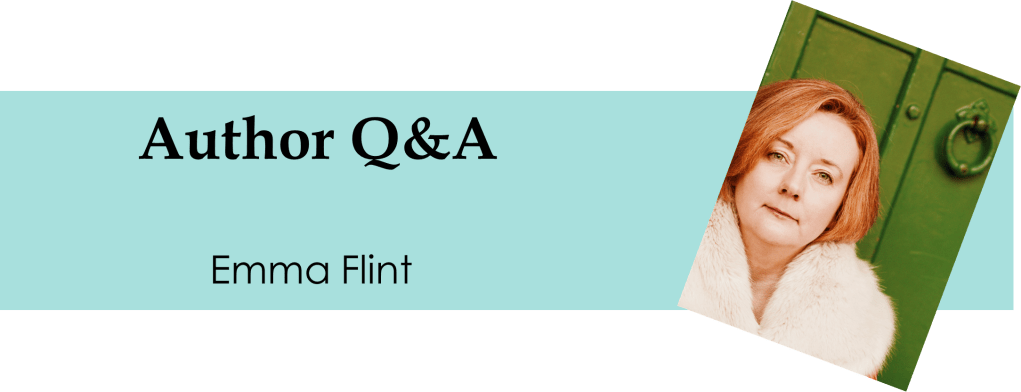
I was born and grew up in Newcastle Upon Tyne, and graduated from the University of St Andrews with an MA in English Language and Literature.
I’ve always written, ever since I knew what stories were, and since childhood, I’ve been drawn to true-crime stories. My first novel, Little Deaths, was inspired by a crime that took place in 1960s New York. Little Deaths was longlisted for the Women’s Prize for Fiction, for the Desmond Elliott Prize, for the Crime Writers’ Association Gold Dagger Award, and for The Guardian’s Not the Booker Prize.
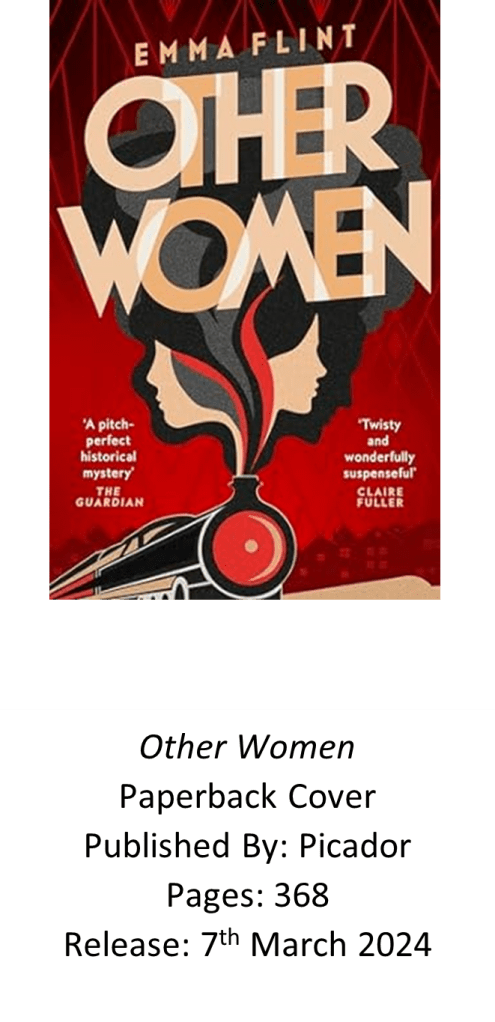
My second novel, Other Women, is the story of a love triangle that ends in murder. Also inspired by a true story, it’s set in and around London in the 1920s. In February 2023, it was selected as a Zoe Ball BBC Radio 2 Book Club pick.
Meet Emma Flint
Questions on Writing
What has been the hardest part of your writing experience?
Balancing the desire to write and finding the energy to write, with the need to work and earn a living.
What have you learned about yourself when writing?
That I must trust myself and the process. No matter how difficult a scene or even a book might seem, I have to believe that I have what it takes to write it, and that I must keep going.
Do you make yourself write everyday/regularly, or only when inspiration strikes?
I used to write only when inspiration struck, particularly because I had a chronic illness which meant I had very limited energy. But I’m trying very hard this year to write every day, whether I feel inspired or not.
Your book Other Women was a bit hit; where did your inspiration comes from?
I first read about this case in my late teens and I remember wondering why most accounts focussed more on the killer than on his victims. I wondered about the terror his victims must have felt when they realised what lay behind his attractive appearance and his superficial charm.
I think at the heart of every novel is a question that the writer wants to explore (What would happen if…? How would it feel to…?) – when I came back to the case in my forties, my initial question was: Why would an intelligent, mature, respectable woman – who had so much in her life that was positive and good – risk everything that mattered to her for a man who was already married? What was it about this man and this woman, that led to this situation, which ended in a horrific tragedy?
What does literary success look like to you?
Being read and respected by people I admire. Having strangers tell me that my book moved them. Feeling satisfied by what I’ve written and knowing I can’t make it better.
How much planning/world building do you do before writing, and how much comes along as you write?
I do enough research to have the basic facts of the story before I start: my characters’ ages, what happened to them, and where and when the key events took place.
Then I spend about six months exploring my main characters. I put them into scenes that I’m not necessarily intending to include in the novel, just to see how they react. I ask them questions – how do they drink a cup of tea? What would they do if someone spilled coffee on them in a café, and how would their reaction differ if it was their sister or their husband or an attractive stranger? How do they choose clothes? Do they feel self-conscious when they walk down the street? Do they enjoy sex? How do they argue?
It’s important to me at this point to let some air into the characters: I read a lot, I go to galleries, I watch films. I think about what their reactions would be to the things I’m experiencing: this helps me get to know them inside out.
When I feel I know them as well as I need to, I go away and start to plot out the story, and then the individual scenes I need to write to tell that story. If I’m lucky, some of the scenes I’ve written during that exploratory period will fit that plot, in part or in full. Then I start to fill in the gaps.
I absolutely don’t write from start to finish – when I sit down to write, I choose the scene I’ll write that day from my list. That leaves room for surprises and detours, which I love.
When I get to the end of that first draft, I leave it for a few weeks to percolate, then read it through, looking for the gaps and the overwriting. I know now what my bad habits are – I’m looking here for irrelevant backstory, for scenes that are overfull of nice prose but don’t move the story or the character forward. Then I start to cut and to rewrite. Around draft seven or eight, I’ll send it to my agent and/or my editor, and get some feedback.
How do you celebrate when a book is published?
I celebrate when I finish a book, as that’s when the bulk of my work is done. Publication is still several months away at that point – and by then, I’ll be immersed in something new.
When I finished Little Deaths, I went on holiday, the first one I’d had in six years. I planned to read and relax and not think about writing at all – however, on the second day, I started writing Other Women. I’m either not very good at taking breaks, or I don’t view writing (at least in the early stages) as work. When I finished Other Women, I was already writing my third novel, and it felt natural to turn to that straight away.
Now I’ve learned that long breaks don’t work for me, so I celebrate in a low-key way: dinner with friends or a massage, or a couple of days away to clear my head, then sit down to immerse myself in the next book.
Questions on Books and About You
Firstly, the most important question, what books are currently ‘on your bedside table’?
Harold Acton’s biography of Nancy Mitford, Prima Facie by Suzie Miller (I saw the play in London, starring Jodie Comer, and was blown away by it), and a fantastic debut novel by Katy Massey, called All Us Sinners. The writing is wonderful, and it tells the story of a well-known crime in a fresh, moving and personal way.
What children’s book would you suggest every adult read?
That’s a great question. My favourite book when I was a child was The Ordinary Princess, by M.M. Kaye. It’s about a princess who has six older sisters who are beautiful in the traditional fairytale sense: they all have golden hair, slender figures and eyes like sapphires. The main character seems destined to grow up in the same image, but is ‘cursed’ by a wicked fairy to grow up ordinary. I loved the idea that even apparently ordinary children are all actually wonderful.
I was also a big fan of Maurice Sendak’s books – especially The Sign on Rosie’s Door and Where the Wild Things Are. I think he has a lot to teach adults, especially writers, about how limitless our imaginations can be if we let them roam.
What does your writing space look like?
Chaotic! I moved out of London in the autumn, after 25 years in the city and 10 years in the same flat. It’s taken me months to unpack, and my study is the last room I need to finish. I’m about halfway through unpacking my books and my desk is still hidden under boxes, so I’m currently writing on the kitchen table.
When the study is finished it will be wonderful – I have bookshelves on all four walls and my desk overlooks a graveyard (I’m currently writing a novel that includes graveyard scenes so this is serendipitous). It’s at the top of the house, with lots of light and quiet, and it will be my sanctuary.
How many books do you think you own?
I’ve just moved house so I’m aware that I have more than I thought! I think probably around 800-900. And I got rid of a lot before I moved…
Who is your literary icon?
Jane Austen, for her understated wit, her gift for dialogue, and for her commitment to writing despite financial instability and illness. And Hilary Mantel, for her dedication to delving deeply into characters and her ability to take people and events we thought we knew from history and make them real, rounded, complicated and rich. Her Wolf Hall trilogy is a masterpiece.
If you could own one rare/1st edition copy of a book, which would it be?
I’d love to own a first edition of Persuasion.
Is there an author who you always read?
There are several! If any of the following contemporary authors have a new book out, I’ll buy it as soon as I can: Sarah Waters, Jill Dawson, Chris Whitaker, Tana French, Megan Abbott and Emma Donoghue. I felt the same way about Ruth Rendell, PD James and Hilary Mantel, and have read everything they’ve written at least twice.
And finally, are there any plans for any new books? If so, what teasers can you give us?
I’ve started working on my third and fourth novels. Like Little Deaths and Other Women, they’re both based on real crimes, and they both tell the story of those crimes from the perspective of a woman whose voice hasn’t been heard before.
One is set in the early 19th century and is very dark – hopefully the darkest and most frightening book I’ve written so far – while the other is a claustrophobic novel about parents and children, set mostly in one room.
Thank you Emma😊Such insightful answers!
Emma Flint’s Books


 Books By Your Bedside
Great interview!! Another author I’m going to definitely check out 🙂
LikeLiked by 1 person