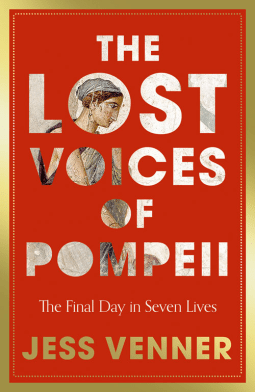
Published By: Mudlark
Pages: 320
Released On: 23/04/2026
We all know how the people of Pompeii died.
But what about how they lived?
Drawing on the latest archaeological discoveries, Dr Jess Venner brings the ancient streets to life through the eyes of those who lived, worked, loved and ultimately met their fate in Pompeii.
Along the way, Venner reveals a community more complex, diverse and human than we ever imagined. We meet Julia Felix, a successful female entrepreneur defying Roman convention; Petronus, a slave grappling with his future after gaining his freedom; politician Gaius Cuspius Pansa, who cements his power and prestige by hosting the Plebian Games at the amphitheatre; and many others.
*****
Thanks to NetGalley and Mudlark for the advanced copy of this title in return for an honest review.
This was another victim of my “I have no work, therefore I have no money and have to cancel some pre-orders” spree, and so I was so excited to be sent an a-arc.
I have climbed Mount Vesuvius (back when I could walk and wasn’t in a wheelchair) and have been to Pompeii – although I became very unwell halfway through and spent the second half of the tour sightseeing in the Pompeii bathrooms. But it was interesting just the same. I wish I’d gone to Herculaneum too, which was also a victim of the eruption, but you could only do the trip to Vesuvius with Pompeii and I really wanted to do Vesuvius. I think I need to go back to Pompeii on a day where I’m not poorly.
The introduction itself was enough for me to know this would be a special book. The passion Jess has for learning, education, history, and wanting to share the stories of ‘forgotten’ people is so moving. I love learning and she really hit the nail on the head when it comes to the importance of learning. It was such an inspiring opening.
I was always a bit of a history buff (and to this day I regret not continuing with it in my studies) and I am very interesting in the ancient world and so this was endlessly fascinating to me. I will definitely be keeping an eye out for future books to satisfy my nerdy cravings.
It’s fascinating because she’s written a non-fiction and a fiction in one. The opening sets up at the factual, historical side. And then each chapter is about a person or persons living in Pompeii at that time. She has used evidence to back her stories up, but there are imagined elements that help put all those pieces together, and I found that such an interesting and remarkable method to tell these stories.
Each story is its own story, but they’re also linked which I liked, because this is what a community would have done. It helps add the humanity to it. Some stories I liked more than others, which isn’t surprising when it comes to short stories, but overall they all bring something special to the book.
While this is a book about Pompeii, I appreciate her words about Herculaneum. Correct me if I’m wrong, but I believe actually about 80-90% of Pompeii citizens were able to evacuate before the crux of the eruption, but only about 10% of Herculaneums did. So why don’t they get the historical attention?
What I wasn’t expecting from a book advertised as a non-fiction was it to be so moving. I mean, I know what happened to the people of Pompeii and Herculaneum, it’s nothing new. But it’s true, we only know them as numbers of dead people. We forget they were real people with friends, families, jobs, children, pets etc. and so the bits she writes about the moment of impact is so moving that I found myself with watery eyes at times. I wanted to step in and save these fictional people almost 2,000 years old.
As a self-confessed member of the nerd species, I loved it, and I highly recommend it to nerds and non-nerds alike. I am generally not someone who buys a physical copy of a book if I’d read it on the Kindle, but this may be an exception.
 Books By Your Bedside