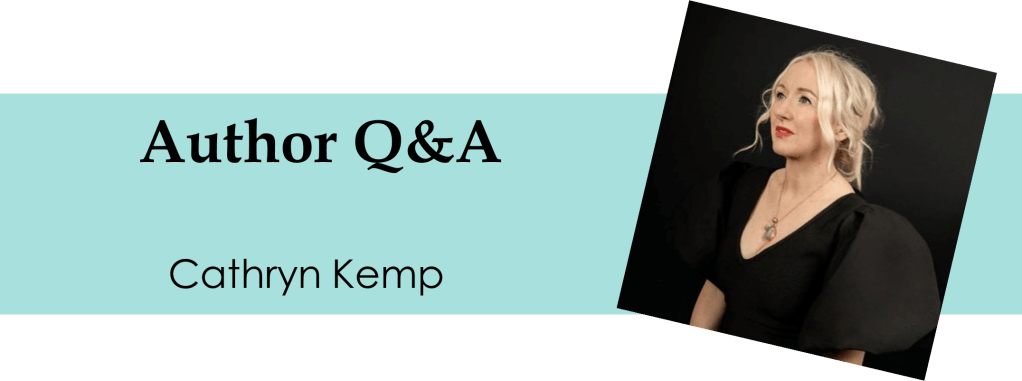
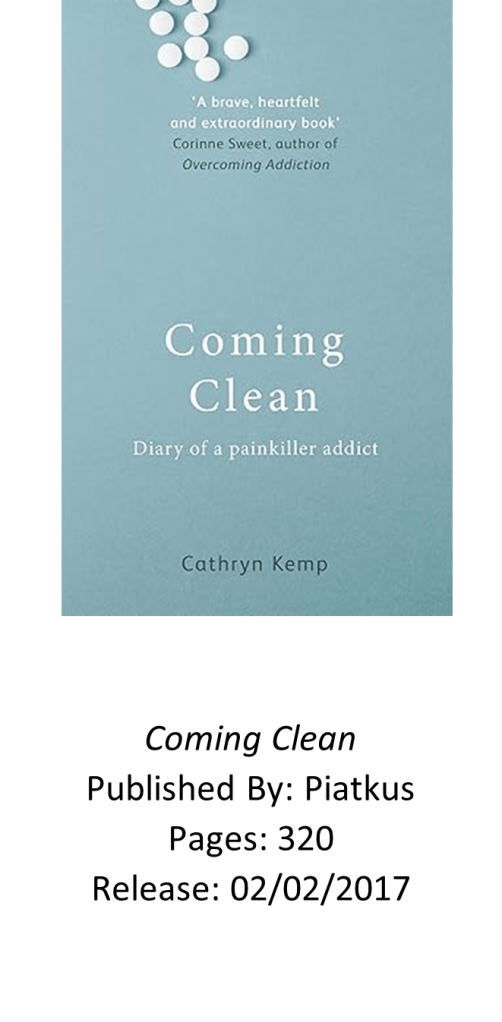
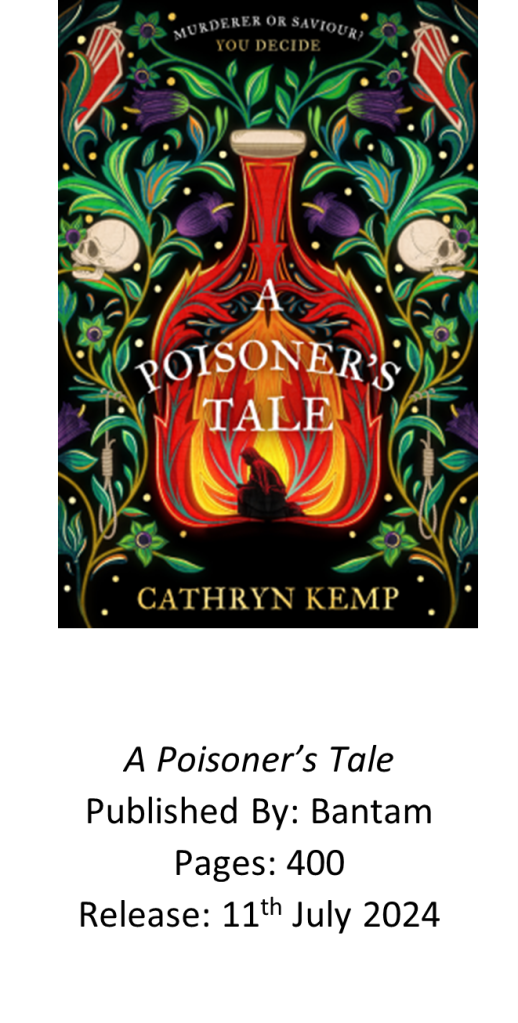
Writing has been a way of life for me for 25 years. I was a cub reporter on the local paper, and quickly moved up to the national press. A few years later, I became life-alteringly ill, spent years in and out of hospital, writing diaries and stories all the way through, which culminated in my memoir, Coming Clean. Writing has always felt like a natural extension of who I am, rather like an ephemeral limb. I circled Giulia Tofana’s dark story, until 2021 when I began writing A Poisoner’s Tale in earnest after completing the Faber Academy, Writing a Novel course. I’m solo parent to a brilliant cricket-obsessed boy and live on the south coast with my familiar, a ginger cat. I am restoring a glorious wreck of a house and am obsessed by interior design and all things art and culture.
Meet Cathryn Kemp
Questions on Writing
What was the hardest bit about writing A Poisoner’s Tale?
The hardest part was making the shift from writing non-fiction to creating a work of fiction, shifting away from my journalism background where I’d be forensically fact-checking everything and into the nebulous realms of story-telling. Writing fiction, and moving away from the few facts we know about the legend of Giulia Tofana, was a leap into the unknown for me. I had to take on the story as my own and work in the gaps left by history to create this fictional retelling. That was uncomfortable at first, but the sense of liberation when I started to own my story was incredible.
I’d been ghostwriting memoirs, including celebrity and public figures, and had a few Sunday Times Bestsellers and an Amazon #1 under my belt, which is why I found the shift to fiction difficult at first. My agent recommended I apply for the Faber Academy Writing a Novel course, and I’m so glad I did! It was on that course in 2021, that I threw out everything I’d already written on Giulia’s story and started again.
What have you learned about yourself when writing?
Hard question! I’ve learned I am endlessly resilient when it comes to creating a book, whether my own or someone else’s. I will be unreasonable with myself and start writing at 5am, and I will spend as long as it takes to craft the story I want to tell. I’ve also learned that I’m always learning. Fiction is a very different beast to non-fiction, and it is challenging and exciting and full of possibility.
Do you make yourself write everyday/regularly, or only when inspiration strikes?
If I had the luxury of waiting until inspiration strikes, then I’d probably never get around to writing at all! I write every day, including Sundays. I’m that kind of writer. If I leave a novel too long, it seems to coagulate and I have to wade back through it all to connect with the magic. I find writing for a few hours every day keeps the story fresh, the plot points singing and ideas seem to appear while I’m in the process of working.
What does literary success look like to you?
Gosh. This is a really interesting question. My friends might say, very kindly, that I have some degree of literary success as I’ve written so many bestselling books, albeit as a ghostwriter. To my mind, publishing my own works of fiction with a publisher such as Penguin is a dream come true. I’m also experiencing the joy of talking about my own work with interested and engaged book lovers and sellers, and writing for the most incredible publishing team. Seeing my book in readers’ hands around the world has been utterly joyous, and feels akin to success, though I’d have to think more about how I’d really define that. Of course, I want my books to become bestsellers, and so many wonderful people have got behind A Poisoner’s Tale, from the fantastic editorial team, to the sales and marketing, the audio and film/TV rights people. It really is a huge privilege to be part of the publishing eco-system, and to be unleashing my debut novel into the world.
How much planning/world building do you do before writing, and how much comes along as you write?
Research is a really important part of the writing process for me, especially as I’m writing into the world of the 17th century. I want to know more than just the colour of the wallpaper, I want to be able to walk through the world in a sensory way before I embark upon the writing. I want to have at least an understanding of how the world smells and feels, what my characters would see and touch, what they would smell, what they might taste. I don’t know if this counts as planning, but I want to enter the world confident in what I will find there, and the only way for me to do this is to read around the subject as much as I can.
What was it that inspired you to write this particular story?
Giulia first appeared on my computer screen almost 10 years ago. I was researching a homeopathic remedy, arsenicum, which is a dilution of arsenic, and the online trail led to her. I couldn’t believe no one had written about Giulia Tofana as her story seemed astonishing, and the prosecution of this circle of poisoners was a huge scandal in 17th century Rome – and across the whole of Italy.
How did you celebrate publication?
I was so happy to be celebrating at my local independent book store, the Hastings Bookshop, with an ‘in conversation’ with incredible bookstagrammer and literary celebrity, Sarah Gwonyoma, @WhatSarahReadNext, as well as family, friends along with book signings and other events soon to be announced! I feel incredibly lucky to have the support of my community as it’s a strange, fragile thing to send a book into the world. In some ways, I don’t feel it’s mine anymore. It belongs to everyone who reads it
Questions on Books and About You
Firstly, the most important question, what books are currently ‘on your bedside table’?
My TBR pile is teetering these days. I’m not straying far from historical fiction, but I can’t wait to read Drive Your Plow Over the Bones of the Dead by Olga Tokarczuk, and There Are Rivers in the Sky by Elif Shafak.
What children’s book would you suggest every adult read?
Alice’s Adventures in Wonderland by Lewis Carroll. As someone who disappears down rabbit holes in research, world-building and life, this opened up the world of imagination, magic and fantasy to me when I first read it. It made me look at the world in new ways.
What does your writing space look like?
I am lucky enough to have a home office space, a room dedicated to my writing and research. It is a confusion of books, maps, notebooks, plants, anything foraged or collected from my travels for each book, crystals, candles and a shell I carry everywhere with me. The shell was given to me when I was in hospital for an incurable condition, which I managed to survive. It reminded me of my home in St Leonards-on-Sea and became a little symbol of hope and resistance.
Currently, I have a candle that I burn for inspiration, a tiger’s eye stone, a hagstone because it is the only one I have ever found on our local beach, a pile of notebooks and scraps of paper with ideas, another pile of reference books and my shell: a white pearlescent flat thing. Oh, and plants, I love houseplants but don’t have the best track record of keeping them alive!
How many books do you think you own?
Too many! Let’s definitely move on to the next question because I dread to think. I did a cull of books in my last house move and sometimes wish I hadn’t because it was like getting rid of old friends.
Who is your literary icon?
Hilary Mantel of course. She created historical fiction as an entirely new phenomenon. The humour of the Wolf Hall trilogy. The lightness of touch. The pacing and violence and originality. Every time I re-read (and I read at least one of them a year), I find something I’ve missed, a subtlety or a nuance that she wove through the text.
If you could own one rare/1st edition copy of a book, which would it be?
I imagine Harry Potter and the Philosopher’s Stone would be worth a lot of money!
Is there an author who you always read?
I come back again and again to Hilary Mantel’s Wolf Hall trilogy. It reminds me why I love history and why I love historical fiction.
And finally, are there any plans for any new books? If so, what teasers can you give us?
Yes, I’m currently working on the edits of book 2, which looks to be published by Penguin early in 2026. It’s the same era, the 17th century, but a very different place. Some of the themes circle the same ideas: motherhood, sisterhood, female agency, witchcraft and defiance. I’d love to say more but I’m not sure I can yet.
Thank you Cathryn 😊 Oh please tell me A Poisoner’s Tale is going to be made into a film!!
Cathryn Kemp’s Books
 Books By Your Bedside