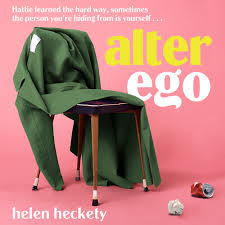
Published By: Renegade
Pages: 352
Released On: 18/07/2024
Six months ago, something happened that changed everything for Hattie. The next morning, she came up with The Plan. It was time for a whole new life. That’s how Hattie ends up in a little cabin in the middle of nowhere, where the woodland stretches for miles and stars light up the night sky. Here, Hattie can be whoever she wants to be.
At two years old, Hattie was diagnosed with a condition that would alter the course of her life. Ever since then she’s had to constantly explain herself and pretend that the pitying looks don’t bother her.
If she wants The Plan to work, nobody back home can know why she really left, and nobody in her new life can know the truth about her.
But it’s not long before she’s caught in her lies – trapped between who she really is, and who she so desperately wants to be. When everything falls apart, can she piece herself back together?
*****
Thanks to Renegade and Dialogue Publishing for the gifted proof of this title in return for an honest review.
**Contains Slight Spoilers**
Seven years ago, I started to become ill, and since then I have had to learn how to live and navigate this world as a disabled person. And something tat has really become obvious to me is that you hardly ever see disabled people in literature, unless they’re the side act, or a novelty. You never see (or at least I’ve never seen) characters who just so happen to be disabled living their life as if they were an able-bodied character. So this was instantly refreshing before I’d even read it.
This truly gets to the heart of what it’s like to be a young disabled woman in an able-bodied world. Within the first chapter or two, I knew this would be something special.
Now, if I’m not mistaken, I do believe Helen herself has some sort of disability but I’m not going to pry into what, that’s her business, but you can really tell how much it means to her, every word is there to perfectly explain what it’s like, the struggles, the judging, and the fears.
I loved the frustration shown by Hattie that if you don’t look disabled – e.g. in a wheelchair – if you look “normal”, then people don’t believe you’re actually disabled. They moan when you park in a disabled bay even if you have a blue badge, they tut when you use the disabled toilet. They think you’re just using excuses not to do things. And it’s hard. It’s hard being disabled to begin with, but it’s hard to have to prove to strangers that you’re ill enough to “qualify” and that’s where I think Helen has excelled. That frustration and anger and how tired it makes you to have to keep proving yourself. Ad the desperation to be “normal” to fit in.
I liked Hattie for the majority of the book. I felt compassion for her and an understanding. There were times where she’s sort of, she’s deceiving people and lying about things to run away from her problems. I completely understand why she does it, but at times I found her a bit unlikeable and aloof.
What I will say with certainty is that I really didn’t like her friend Elle. The person she’d spent nearly her whole life with, her best friend; she just didn’t seem to care about her friend’s health, she felt very egotistical and better than everyone. She wouldn’t give Hattie time to explain, she kept pushing and pushing and, no matter what redeemable qualities she may have had, I disliked her from the start to the end.
It has a very interesting format. The crux of it is written in the present, us going along with Hattie’s life as it is now. But there are also chapters set in the past. As a child or whatnot, so we get to learn how her disability has affected her whole life. And then we get mysterious pages with just one paragraph, titled “the night that changed everything”, which is very intriguing. And some of it is formatted in text messages too. It gives us an interesting way to look at Hattie’s life and fiends and family etc. without it being too heavy.
I, like a lot of readers I imagine, don’t necessarily read every single word in a book individually, we tend to scan a bit and read sentences as a whole. But every now and again you come across a book that deserves to have every single word read and digested and appreciated and this is one of them. Which is why it took me a little longer to read than a book this length normally would, but it felt necessary.
It made me really angry and frustrated at times, much like Hattie felt How difficult this life can be, the things no-one thinks about, the differences between being able to climb one flight of stairs but the impossibility of climbing two flights. And the way the other characters were behaving – not deliberately, I don’t think there was any ableist malice there – they just don’t understand, and they say and do things and act in ways that are very hurtful to Hattie, and I really felt that.
It’s not the most uplifting of books in my opinion. It does have uplifting moments, funny moments, but it’s got a sad undertone through it that – whilst I liked the book immensely and will be suggesting it to everyone – could possibly be a bit too negative for some. It’s difficult, because it’s really about personal preference. I liked it and that may be because I could relate so much.
It doesn’t mention what disability Hattie has. I had my thoughts, and a lot of it sounded similar to me, but I thought it was interesting because Helen could have said what it was at the start, but this way, it gives us the chance to imagine and find bits of her we recognise ourselves in.
What I think she has really captured well is two fold. Firstly, when you’re disabled, and if you have closed friends who understand your disability, you end up not seeing it, it’s just who you are, and then it’s a shock when someone new tries to mention it and work around it. But secondly, on the flip side, because you do live with it, you can find it frustrating when no-one knows about it, when they can’t (or don’t) see what’s wrong.
I think it’s an interesting book to read for anyone; helpful if you’re not disabled to maybe open your eyes, but also for those living that life. It’s not preachy, it’s not a non-fiction book about how to live with a disability, it’s not in your face, on the nose kind of thing. It is entertaining, sometimes funny, exciting, interesting, maddening – it’s got everything you want from a book but with some added issues that gives it that depth.
 Books By Your Bedside