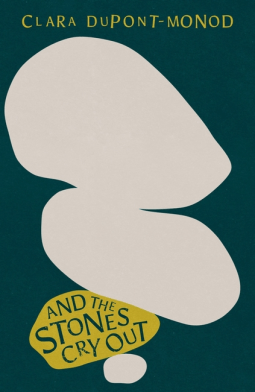
Published By: MacLehose Press
Pages: 176
Released On: 11/04/2024
Translated By: Ben Faccini
This is the story of a child with black eyes that float in and out of focus, a child soft and round, with translucent, blue-veined legs unable to hold his weight. This is the story of his place in the Cévennes house where he was born, overlooked by swaying trees and craggy mountains.
This is the story of his siblings: the eldest who spends his days cheek-to-cheek with his baby brother, attuned to the rushing, buzzing, whistling sounds that connect him to the outside world; the sister who rejects him and resents him for consuming the attention of her parents and brother, for turning her family upside down; and the youngest, whose life unfolds in the shadow of what his brother’s might have been.
This is the story of the ancient stones embedded in the courtyard walls, devoted witnesses to the children’s lives, who watch over them and tell their tale.
*****
Thanks to NetGalley and MacLehose Press for the advanced copy of this title in return for an honest review.
I heard about this book in a 2024 preview session and it instantly grabbed my attention, and at less than 200 pages, I thought it would be a good read to fit in when I’m busy.
It is such a beautiful exploration of disability and how it affects all around it. And the relationship between the baby and his older brother is a beauty to behold. Heart-breaking at times, but no less beautiful.
There’s no real chapters in this book. I don’t like long chapters, and I especially dislike books that don’t have any. But it didn’t seem as much of a big issue with this for some reason. Maybe because it’s short already, that it just felt like one big chapter, I’m not sure. Maybe splitting it into too many chapters would interrupt the flow, interrupt the feeling of the book. But for once, I wasn’t against the decision.
It’s split into three sections. The first from the point-of-view of the eldest boy. The second from the point-of-view of the only sister. The third point-of-view….I won’t spoil it by saying who that is, but they’re all given enough time to shine and tell their own stories.
This is the first thing I’ve read of Clara’s, and whilst I know it is translated and so it might be a mixture of her work and Ben’s, but I can already tell she’s an expert at description. Of the location, love, family, sounds, smells, feelings.
There is very little dialogue in this book. Nearly none in the first section, more in the second, and little again in the third. It’s instead told via the stones outside of the house. This means it could have been really difficult to get an understanding of the characters, and yet I still felt like I knew them, especially the eldest son. He was more of a character than some of the ‘more developed’ I’ve read in other books.
We don’t know the characters names. We have a rough idea of ages, but that’s about it. This means we have to create our own characters in our heads and I think that adds to the power of the story, it makes you more invested and it touches you more.
It is a very harsh, but raw and honest depiction of disability and the difficulties that come with it, things you may not think of unless you’re in that position: schooling, benefits, housing, friends, employment, community. Disability affects not just the physically or mentally disabled, but every single thing or person around them, and that is difficult. It’s often swept under the rug, and the hard things about disability are often hidden, but this doesn’t hide it. This puts it on full view, which is hard to read at times, especially if you’ve not had much experience with disability.
It was good, entertaining to read, and I enjoyed it, it was interesting and thought-provoking, but a bit strange, very unique; I’ve never read anything like it. But why it’s narrated by the rocks, I’m still not sure.
 Books By Your Bedside