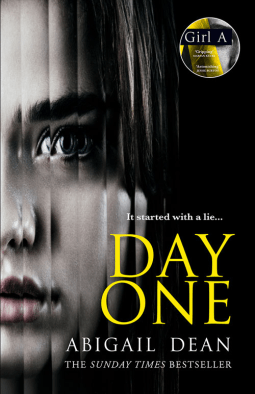
Published By: HarperCollins
Pages: 384
Released On: 28/03/2024
Stonesmere will never be the same again…
A village hall, a primary school play, a beautiful Lake District town. Into this idyllic scene steps a lone gunman whose actions set off a train of events that will have devastating consequences for the close-knit community of Stonesmere.
At the epicentre of the tragedy is Marty, daughter of the teacher who dies trying to protect her pupils. What did she see? How is she involved?
In the weeks and months following the killings, conspiracy theorists start questioning what happened. For outsider Trent Casey, the truther movement offers him a chance to step into the spotlight to expose the ‘sham’ of the killings.
Marty’s and Trent’s lives will become entwined as events spiral out of control. The true story is gradually revealed, but at what cost to those caught up in the maelstrom…
*****
Thanks to NetGalley and HarperCollins for the advanced copy of this title in return for an honest review.
Abigail’s previous book Girl A was such an absolutely thrilling book and I was so hoping she would produce another one, and so I was excited to get to read this. If her previous book was anything to go by, I knew this would be thrilling and unique, and couldn’t wait to jump in.
Many years ago, I read Jodi Picoult’s book Nineteen Minutes, about a school shooting, and I’ve never forgotten it, and it still remains my favourite Picoult novel. And this is the second book I’ve read about a school shooting, and I think it is going to have the same impact; one that stays with me for years.
What I found really interesting is this is set at a school in the UK, which is unusual for a school shooting, and I think that adds to the thrill of it, as it’s (thankfully) not something we experience. I just wish this was just a fictional tale, and school shootings were this fantasy thing that only happens in the pages of a book.
We have various POVs. I won’t spoil it by saying exactly who they all are and how they relate, but we have children who were there at the time, relatives, parents, strangers, friends, neighbours, victims, perpetrators. It gives us a full 360 degree look at how this event changed everything for everyone in this small community; the kind of community where things like this just don’t happen.
What I liked about this was that Abigail has used the viewpoints of both children and adults. Adults are meant to move on, not show emotion, manage the children, but they’re being torn apart. Children are meant to be innocent, and yet they’re facing the dead bodies of their friends, and having to live with survivors guilt.
It also shows how something like this stays with you. We revisit the day it happened, the immediate aftermath, the months after, even the years after. Because things like this don’t go away by the next day. But it’s not a linear narrative. We go forwards and back. It teases scenes yet to come, and harks back to those already been. It explores the ide of conspiracy theories, and how a potentially dangerous train of thought can gain power and make it even harder for the victims.
There’s very little preamble. There’s enough to gain an understanding of the setting and introduce characters, but the shooting happens almost immediately, which leaves a good 80-90% of the book documenting what happened after. That’s a brave move I think, because usually you would build up to an event, set the scene, build the tension, and then have the aftermath. This is mostly aftermath, with some flashback scenes. And I think that’s what makes it so good because she’s had to find a way to make the aftermath as exciting as the big event.
A book of this length I can usually read in a day, maybe two, but this took me a few days. And it’s not because it’s hard to read – although at times the topic makes it so – but because it felt so important and so vital to focus on every word, rather than do a bit of skim reading like a lot of us do.
I will say that it is less haunting than Girl A. It is still a thriller and has really dark bits, but with Girl A, it was the physical things that were harrowing, whereas with this, it is implied, and it’s more of a mental harrow, rather than the physical. It is about human nature, and how we would react in the most horrific of circumstances.
Abigail doesn’t write easy books, that’s for sure. They’re uncomfortable and unpleasant and violent and terrible and horrific. They’re about situations we don’t ever want to imagine. But I think part of their horror is not just the actual physical goings-ons, but the fact they are about humans. We read this and go “how could someone possibly go and shoot children” and then someone does. You say “how can someone possibly keep their children as prisoners”, and then someone does. And so it forces you to take a look at yourself, and at your community, and that gets uncomfortable at times.
As bizarre as it sounds given the topic, it wasn’t a full on thriller for me. It was quieter than that. It didn’t hand all of its thrills on a silver platter, you had to work for it. It’s more of an internal, psychological thriller, than all guns blazing – if you’ll excuse the bad choice of words.
I’m sure I’m not alone to say that I often compare an author’s newest book to ones I’ve read before, and I did at times ponder as to whether I enjoyed this or Girl A more. But I realised I didn’t want to compare them. I loved Girl A, I thought it was exceptional, and there are elements of it I preferred to this one, and vice versa. But overall, I think they’re both fabulous in their own way, with strengths of their own, and I didn’t feel the need to come to any conclusion about it. I enjoyed both, they’re both well written, and I know I’ll be looking forward to Abigail’s next novel just as much as I was looking forward to this one.
Completely different to what I was expecting from her, but epic all the same.
 Books By Your Bedside